Geography
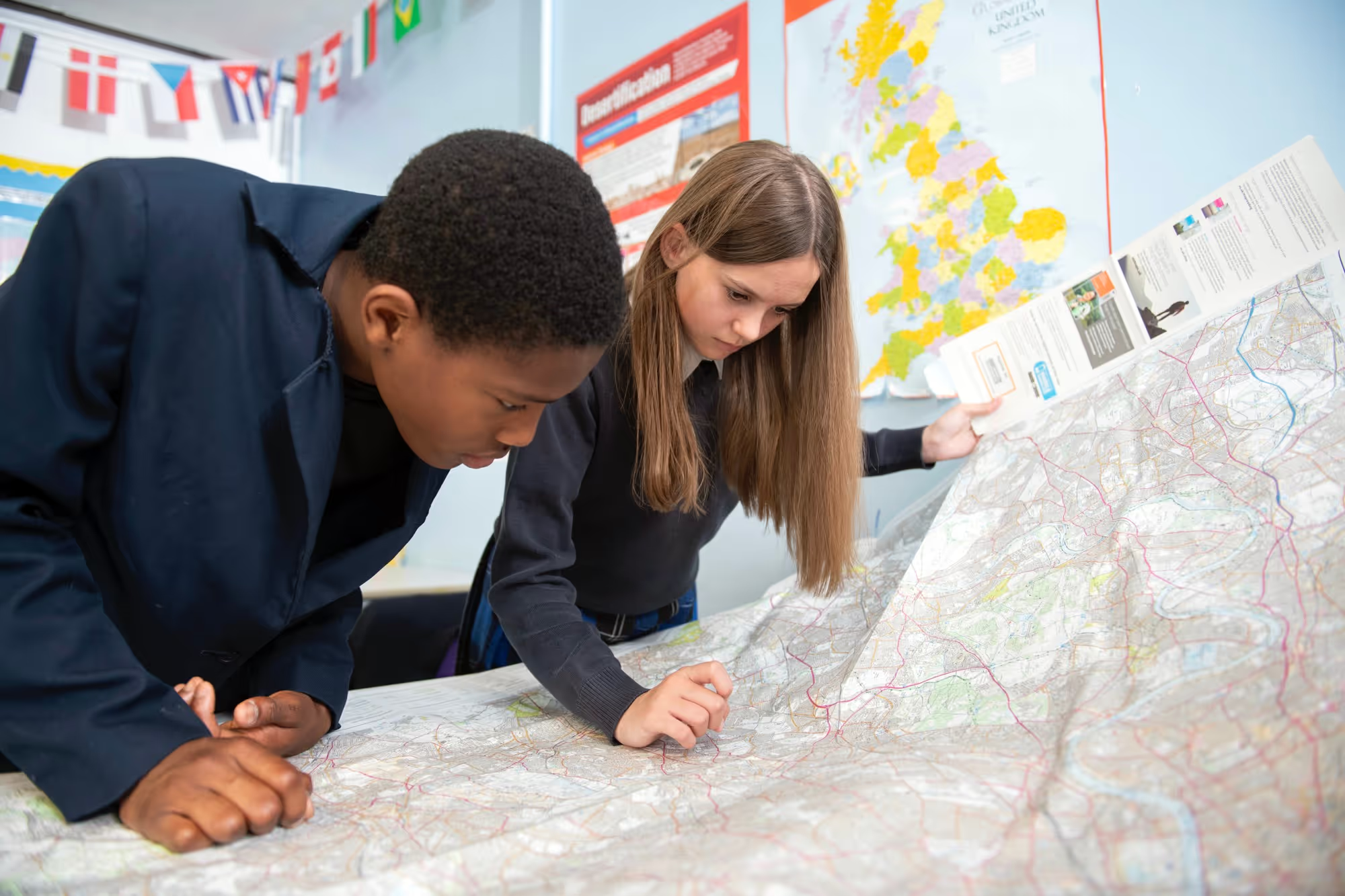
Our Geography curriculum inspires curiosity and equips students to understand and navigate the complexities of our world
ExploreCurriculum Intent
Geography inspires fascination with our world, helping students belong by showing kindness and care for local and global communities. We build the belief that understanding environmental processes enables us to act with integrity for the planet’s future. Cultivating curiosity about natural and human environments, students apply a scholarly approach to data manipulation and landscape analysis. By exploring global challenges with high aspiration, students become knowledgeable geographers capable of solving complex world issues.
Key Stage 3
Taught through 2 x 55-minute periods each week
In Year 7, students engage with a concept-based curriculum designed to help them transition from Key Stage 2 while deepening their understanding of geographical skills and places. They will learn to describe trends, question, infer, interpret graphs, and explain using a geographical lens, with a focus on the United Kingdom to build local knowledge and understand the causes and consequences of wealth disparity and natural hazards.
In Years 8 and 9, students build upon the fundamental principles and skills from Year 7. The place-based curriculum allows them to apply their learning across various locations and recognise the links between place and theme. Students will analyse and interpret places and data, understand the connections between human and physical environments, and effectively communicate these concepts using geographical vocabulary. Complex themes such as climate change, coasts, and locations like Antarctica and Russia are explored, fostering a comprehensive understanding of the world and its key processes.
Key Stage 4
Taught through 3 x 55-minute periods each week
Students investigate the connections between physical and human themes on local and global scales. Following the AQA GCSE specification, they will explore case studies from the UK, higher-income countries (HICs), newly emerging economies (NEEs), and lower-income countries (LICs). Topics include climate change, poverty, deprivation, global shifts in economic power, and the challenge of sustainable resource use. Students are encouraged to understand their role in society by considering different viewpoints, values, and attitudes.